

A day in the life of an NSCC Nonprofit Leadership student
Get to know a Nonprofit Leadership student
Name: Lynn
Program: Nonprofit Leadership
Campus: eCampus
Class: 2027
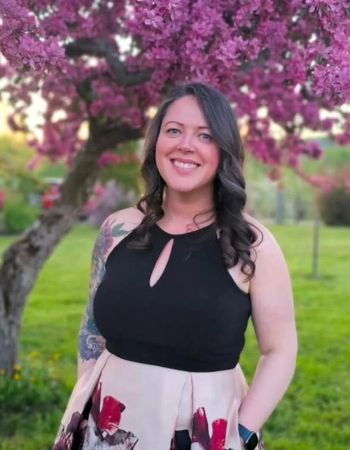
You’re a Class of 2000 NSCC alum. Please tell us about your previous program and why you decided to return to NSCC?
After finishing high school, I really had no idea what I wanted to pursue. I completed one year at Cape Breton University, but I still felt lost. A family member recommended NSCC. I researched programs and applied to a few that interested me. I was accepted into the Community Residential Worker program. This program provided me with practical training in supporting and working with people who have diverse abilities and support needs.
It was a very welcoming environment - especially after a year at university. You weren’t just a number or a face in the crowd of a lecture; the instructors and staff at NSCC took the time to get to know you. They were always eager to help and provide guidance to help you succeed.
Attending NSCC so many years ago was one of the best decisions I have made; the people I have met and worked with have shaped the person I am today.
What brought me back to NSCC was the Nonprofit Leadership Graduate Certificate program and the ability to study part-time and online while still working full-time.
What were you doing before you chose to study in the Nonprofit Leadership program?
Since graduating in 2000, I have been working in small option homes, group homes, and supported apartments in Cape Breton, Halifax, and Ontario.
For the past 17 years, I’ve been working in the nonprofit sector: 15 years at an organization in Halifax called The Prescott Group, and the last 2 years at an organization closer to where I live in Nova Scotia’s Valley region, The Flower Cart Group.
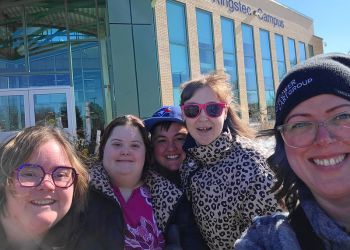
Why did you choose to study in the Nonprofit Leadership graduate certificate program?
17 years of experience in the nonprofit sector have shown me both the impact this work can have and the challenges it faces. I’ve spent my career working directly with participants and while I love being on the front lines, I’ve reached a point where I feel ready to contribute at a broader, systemic level.
More than ever, we need leaders who have the knowledge, skills, and strategic vision to guide organizations through change and keep them strong, sustainable and responsive to community needs.
This program provides an opportunity for me to deepen my understanding of nonprofit leadership, enhance my ability to advocate for the sector and help shape the kinds of organizations our communities rely on.
What is it like to study online as an eCampus student?
I am a part-time eCampus student in the Nonprofit Leadership program; classes are 100% online and asynchronous. You work at your own pace.
We receive our weekly learning materials on Sunday and must complete each unit by midnight on Saturday. Although our classes are asynchronous, you need to establish a routine that works for you, as we still have deadlines to meet.
Brightspace (the College’s online learning platform) is well organized; it provides notifications when your program materials are available, along with reminders for assignment due dates, discussion posts, and quiz deadlines. There is also a Q&A section where you can ask classmates or the instructor for assistance.

Are you able to work while you study in the Nonprofit Leadership program?
Yes, I work full-time Monday to Friday at The Flower Cart. What works for me is trying to get most of my schoolwork done on Sunday.
Sundays are when I have the most time to dedicate to school and go through it gradually during the week. I must be intentional about knowing what my week looks like and making sure I have enough time to complete everything. I usually have a to-do list close by to keep me on track.
What does a typical day look like in the Nonprofit Leadership program?
I usually check Brightspace in the morning before heading to work, reading classmates' discussions and making a list of what I want to tackle when I get home. My school day doesn’t start until after I get home from work and my evenings are spent on my computer, working through my weekly units.
We usually have between 5 and 10 items to do; sometimes it’s a reading, sometimes it’s a discussion asking a question about what we are learning, sometimes I am sharing a portion of my assignment looking for feedback from classmates, or sometimes it’s a quiz. Each task is linked to our learning objectives for that week.
This all sounds like a lot but each week, as you work on completing these assignments, you regularly receive feedback from classmates, and the instructor is always available for support and guidance. The most important thing to remember is that if you get stuck, reach out to classmates or the instructor - we are all learning together.
I’ve also downloaded the Pulse app to my phone, so sometimes, when I’m on my lunch break, I can check what's going on in Brightspace and catch up on discussions.
What are some of your courses in this program?
In my first term, I took Introduction to Nonprofit Organizations, which provided me with a broad understanding of the history, impact, and operations of nonprofits, and Financial Management of Nonprofit Organizations, which taught me how to manage budgets and financial resources efficiently.
This term, I am enrolled in Community and Program Development, where we are exploring the dynamics of community change and the approaches to action and planning for program development; and Philanthropy and Fund Development, learning about the concept of philanthropy and strategies for fund development in the nonprofit sector in Canada.
What types of assignments do you do in this program?
Throughout this program, I have conducted sector interviews, gaining firsthand insight into the nonprofit sector, including the challenges and strategies for effective leadership. We have prepared an annual budget for a mock organization and built a nonprofit from the ground up, learning the steps involved in establishing your own nonprofit.
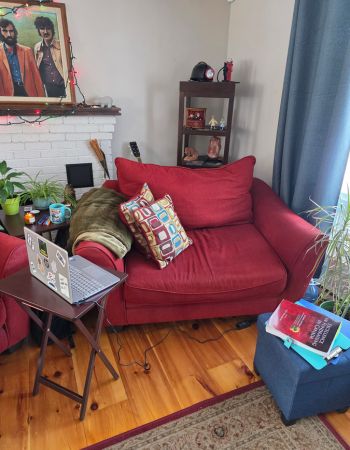
What aspects of the nonprofit field are you drawn to the most?
Currently, I am excited to learn more about fundraising and fund development. Throughout my career, I have sat on fundraising committees and helped at fundraisers. I am building on skills I have learned first-hand, but now I am also understanding the why and the how to effectively plan for change.
What do you like most about the Nonprofit Leadership program?
The Nonprofit Leadership program brings together community understanding, equity and organizational dynamics in ways that genuinely prepare you for real-world work. What I appreciate most is being surrounded by classmates and an instructor who truly care about social impact. Together, we’re constantly reflecting on our values, building our skills, and growing into the leaders we aspire to become.
Is there anything that surprised you when you began studying in this program?
There was a learning curve since I hadn’t been in school for 26 years. Technology has advanced and adapting to online learning is different from being in a classroom where you can have face-to-face, spontaneous conversations.
The first semester presented its challenges; it wasn’t just about starting school - I also had to learn how to navigate the Brightspace platform, ensure my assignments were in the correct format, complete everything needed for each unit and feel confident enough to ask questions when I was confused. Luckily, videos are available to help you understand the technology, and other supports are always available to help you succeed.
I am surprised how quickly the program is going; as I write this, we are nearing the end of term two. Term two was easier to jump into. I am now proficient with Brightspace, I have figured out a schedule that works for me and I am able to maintain a healthy work/life/school balance.
What advice would you give to someone who might be interested in studying in this program?
If you are passionate about helping your community, apply! It took me a long time to go back to school, but I am very happy I did. I am building a toolbox of knowledge that I wish I had started earlier.
What do you plan to do after you graduate from this program?
I am still exploring what life has in store for me after this program. I know I’m drawn to philanthropy and fund development. I’m also excited to begin learning about marketing in the next term, so I plan on to look more closely at opportunities that blend these interests.
Starting this program has been a meaningful step for me; it’s challenging, but I am proud of myself for taking it on. I feel like I have more to contribute, and I’m continually building the skills needed to make a positive, lasting impact in the nonprofit sector.
About the nonprofit sector
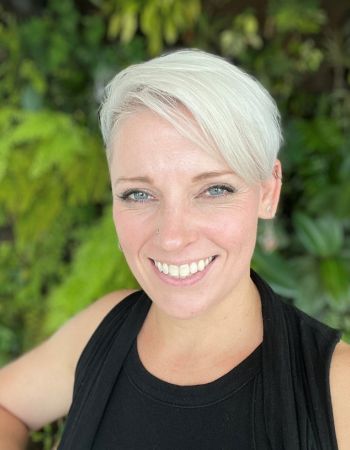
Cat MacKeigan, Faculty for the Nonprofit Leadership program, shares some insights on the industry and what students can expect to learn:
What is nonprofit leadership?
Before talking about nonprofit leadership, we should talk about the nonprofit sector:
The nonprofit sector provides supports, services, and programs that create social impact, filling gaps that government and for-profit organizations cannot fully address due to limited resources, mandates, or profit motives.
These organizations strengthen communities, address social needs, and promote equity across areas such as health, education, arts and culture, environment, and social services. Success in this sector relies on skilled leaders who can guide organizations effectively while staying true to their mission.
Nonprofit leadership involves guiding an organization toward its mission while caring for the individuals and communities it serves.
It’s grounded in:
- Purpose
- Relationship-building
- Community impact
- Making thoughtful decisions
- Fostering trust
- Supporting healthy cultures
- Keeping the mission at the centre of every choice
In practice, this includes:
- Governance
- Financial management
- Fundraising
- Communications
- Program development
- Community engagement
Leadership focuses on setting a vision and inspiring others to achieve the mission.
The Nonprofit Leadership program is designed to develop these skills, preparing students to lead with purpose and create meaningful impact in their communities.
Please share your background in the field of non-profit leadership.
My background in nonprofit leadership is both practical and interdisciplinary. I bring over 20 years of management and leadership experience in the nonprofit sector, including executive roles at multiple organizations and service on the boards of local and national nonprofits. I’ve also taught at several higher education institutions and hold a PhD in Interdisciplinary Studies.
My work spans governance, program development, fundraising, communications, and collaborative leadership, with a focus on building partnerships, embedding Equity, Diversity, Inclusion, and Accessibility (EDIA) initiatives, and helping organizations achieve their missions sustainably.
As a faculty member in the Nonprofit Leadership Graduate Certificate program, I support students in developing the practical skills, strategic thinking, and confidence needed to become effective leaders in the sector.
What skills do you need to be successful in nonprofit leadership?
Successful nonprofit leaders communicate clearly, build strong relationships, and collaborate effectively with people from diverse backgrounds and lived experiences. They are comfortable with problem-solving, strategic planning, and making thoughtful decisions, even when resources are limited.
Adaptability, curiosity, and integrity are essential, and because nonprofit leadership is a people‑centred field, emotional intelligence and a strong sense of purpose are just as important as technical skills. While leadership focuses on inspiring and guiding people toward a shared mission, management ensures the processes and systems are in place to support that vision. Both are essential but leadership is what drives meaningful impact.
This program helps students develop these skills through hands-on, applied learning, real-world projects, and opportunities to work and network with diverse organizations, preparing them to lead with confidence and purpose in the sector.
Do you need experience before you study in the Nonprofit Leadership program?
No, experience is not required - though it can be helpful. Students enter the program from a variety of backgrounds, including the creative sector, community work, volunteering, education, health, and business, while others are completely new to the sector.
Our students include executive directors, program coordinators, board members, general volunteers, and people not yet connected to a nonprofit.
The program is designed to meet students where they are, helping them build practical skills, real-world confidence, and a clear understanding of how nonprofits operate, so they can step into leadership roles with purpose and effectiveness.
What are some career paths for graduates of the Nonprofit Leadership program?
Graduates pursue a wide range of roles based on their interests and skills.
Some work in:
- Program coordination
- Community outreach
- Fund development
- Volunteer management
- Communications
- Advocacy
While others move into leadership positions such as project manager, executive director or team lead.
The nonprofit sector is diverse and dynamic, offering opportunities in:
- Health
- Arts and culture
- Housing
- Education
- Community development
- Environmental organizations
And many other areas where graduates can make meaningful impact.
What should future students know about the program before they begin their studies?
This program is hands-on and applied, giving you the opportunity to work with real organizations, practice practical skills, and build meaningful connections in the sector. The workload is steady and designed to help you build confidence at a manageable pace, while encouraging you to think critically about equity, accessibility, and what good leadership looks like in community.
You don’t need prior experience. Curiosity and openness matter more than perfection. Because the program is delivered online, students should be comfortable using a computer, Microsoft Office, and online learning platforms, and be prepared to manage their time effectively. While there are no scheduled classes, weekly due dates keep you on track, and the program offers a wide range of resources and supports to help you succeed.
Is there anything you’d like to add?
The nonprofit sector plays a vital role in delivering services and supports and is full of people who are passionate about making a difference in their communities.
If you’re looking for a career where your work has purpose, relationships matter, and you can make a meaningful impact in local communities, this field is for you.
The Nonprofit Leadership Graduate Certificate program provides a supportive, hands-on learning environment where you can grow, build your skills, and explore the kind of leader you want to become.
Related Stories
 A day in the life of an NSCC Public Relations student
Brooklyn and the Public Relations (PR) class explore local PR agencies in Halifax to learn more about career options.
 A day in the life: Ayeong
In the Environmental Engineering Technology - Water Resources program, you get hands-on experiences like surveying and testing water samples in the lab. Follow Ayeong’s day in the life as an NSCC student at Ivany Campus and learn about our 2-year diploma program.