A day in the life of a Medical Office Administration student
Get to know a Medical Office Administration student
Name: Reanne
Program: Medical Office Administration
Campus: Institute of Technology Campus
Class: 2026
What were you doing before you started the Medical Office Administration program?
Before starting the program, I worked full time as an esthetician for 10 years. After a while, I began thinking about building a new career path for myself. I have close family members in the medical field, which inspired me to explore opportunities in health care. When I discovered the medical office administrator role, it felt like a great fit for my skills and lifestyle, and it allowed me to use my customer service experience.
Why did you choose to study at NSCC?
My partner graduated from the Medical Laboratory Technology program at NSCC Ivany Campus and had a really positive experience. He told me about how supportive and accommodating the staff and instructors had been, which encouraged me to check out NSCC’s programs for myself.
What does a medical office administrator do in their day‑to‑day work?
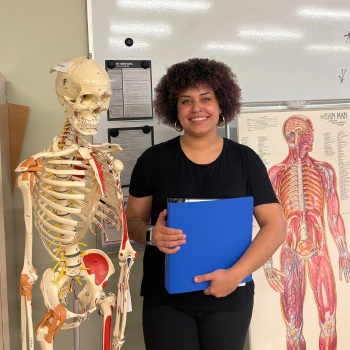
A medical office administrator would be responsible for greeting patients and staff, checking patients in, scheduling appointments, managing electronic medical records, overseeing billing and insurance processes, and ensuring the workplace operates efficiently.
What are some of the main things you’re learning in this program?
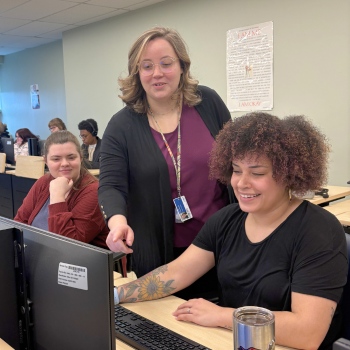
On the administrative side, I’ve developed strong communication skills, including best practices for job applications and interviews. I’ve also gained hands-on experience working with Microsoft tools like Word and Excel, especially when it comes to processing and formatting documents.
On the health care side, I’ve built a solid foundation in anatomy, physiology and medical terminology. A big part of the program has been learning how to use electronic medical records. Billing was definitely challenging at first, but it became really satisfying once I started to understand the process.
What skills or traits do you think make someone a good fit for this program?
I’d say understanding, patience and kindness are really important. You never know what someone is going through, especially in a healthcare setting, so having compassion goes a long way.
Strong communication and organization skills also help, since you’re juggling a lot of different tasks.
What does a typical day look like in your program?
- Morning: A typical day starts at 8:30 am. There are usually 2 classes in the morning, with a short break built in.
- Afternoon: Two days a week, we have a third class after lunch, ending at 3:30 pm. The other 3 days, class wraps up in the early afternoon. The extra free time is a great chance to work on assignments or study.
- Evening: Working at my part-time job or squeezing in some extra study time before I call it a night.
How manageable is the program workload?
I usually spend about 1 to 3 hours a day studying outside of class. Since I’m also working part-time, it can be a bit of a challenge to fit everything in, so I try to schedule additional study sessions on weekends when I can. It can be a challenge to balance school, work and my personal life, but it’s definitely manageable with good support. My friends and family have helped me a lot with that.
How does a work placement fit into the program?
Since this is a 1-year program, it wraps up with a 5-week work placement at the end of the second term. I’m doing mine at an orthopedic clinic. Our instructor helps guide us through the process and checks in with each of us, which makes it a lot less overwhelming.
One of the biggest benefits of the work placement is getting hands-on experience. You get to see what the job is like and how everything you’ve learned in class applies in a real office setting.
What is the best part of your program?
It’s honestly hard to pick just one thing. The people I’ve met, both staff and students, have been really great. At the same time, the skills I’ve gained have been very valuable. I especially enjoyed courses related to communication, organizational behaviour and document processing.
What are your career goals after finishing the program?
My goal is to find a stable work environment where I can maintain a healthy work-life balance. I also hope to build on the administrative skills I’ve learned in the program and continue growing in the field.
What advice would you give someone considering Medical Office Administration?
Focus on developing your soft skills, especially empathy and understanding. These types of traits go a long way in health care. It’s also important to be prepared for a fast‑paced environment, as the workload can be demanding.
Lastly, make sure to take full advantage of the work placement. It’s one of the best ways to experience what the role is really like day to day.
About the medical administration field
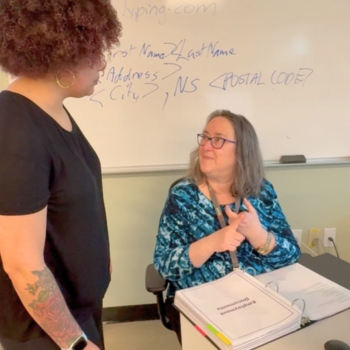
Jolene Pattison, Faculty for the Medical Office Administration program, shares some insights on the program, the field and what students can expect to learn:
How does this program help prepare students for a career in the field?
Medical offices need professionals who are good with people and computers, and who understand administrative processes. Our courses ensure that students have the technical and interpersonal skills needed in the industry.
We ground these skills by sharing examples from hospitals, doctors’ offices and government policy. Students really value the chance to see how these skills apply across a wide range of potential roles and work environments they could find themselves in.
What types of jobs can students get after graduating from the Medical Office Administration program?
Many students are interested in working in hospitals as booking clerks, ward clerks and unit clerks. Hospitals also rely on medical secretaries and administrative assistants. Others choose to work in private clinics or doctors’ offices, often as receptionists or office managers. Beyond that, there are opportunities at insurance companies, medical supply companies and in the government.
Supporting the health care system requires engagement from a range of industries, so graduates who bring strong administrative skills along with health care knowledge have a lot of flexibility in where they can go.
What are medical office administration job prospects like in Nova Scotia?
There’s a consistent need for administrative support in health care. On a typical day, there will be multiple job postings across hospital systems and from smaller employers for these types of roles. Students actively seeking work in the field were all able to find a position.
What skills and traits make someone a good fit for this program?
Attention to detail, patience, flexibility, honesty, empathy and a willingness to learn all go a long way in this field.
Understanding how to use computer applications, medical terminology and administrative processes is necessary, but these skills are all taught in the program. The profession needs people who can adapt to new technology and the needs of the team around them.
How does the program help students find work terms and jobs?
For the 5-week work placement at the end of the program, faculty coordinate hospital placements, as the hospitals have a designated procedure for accepting work term students. Students interested in private practice are able to find their own placements. In some cases, students find jobs in the medical field that count toward their work term.
When we hear about job postings or placements, we let students know about them. We make sure students have the tools they need to find job opportunities.
What’s something future students should know about this program? Any tips on how to succeed?
This is an exciting time to enter the field. With new initiatives in Nova Scotia like One Person, One Record (OPOR), the skills students build in this program are becoming even more essential.
The best tip I can offer future students is to stay engaged in the classroom experience. Attend classes, take notes and apply feedback along the way. Students who fully embrace learning go on to have awesome careers.
Related Stories
 A day in the life: Jessie
Jessie shares a day in her life as an Occupational Therapy / Physiotherapy Assistant student at NSCC Amherst Learning Centre.
 A day in the life: Ribi
Read about a day in the life of Ribi, a business administration student at NSCC Ivany, as she goes to class and participates in student life on campus.