

A day in the life of a Carpentry Certificate student
Get to know a Carpentry Certificate student
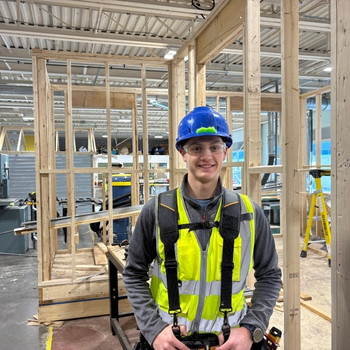
Why did you choose to study at NSCC?
I chose NSCC because Lunenburg Campus is close to home and the College is very involved in my local community. My favourite thing about the campus is the location. We’re right across the street from a hardware store, which is really convenient if we need supplies, and there are lots of food options for lunch within walking distance. I have many friends and family members who have attended NSCC, which also made it feel like the right choice.
How long is the Carpentry Certificate program?
I’m taking the 1-year Carpentry Certificate, which includes 2 semesters of classroom and shop learning, followed by a 170-hour work term with an employer of your choice. If you continue into apprenticeship, NSCC credits you with 900 hours toward your first block.
The College offers other carpentry programs, including a 2-year Carpentry Diploma
What are some things you learn in the program?
We usually start the day in the classroom discussing tools, woodworking techniques, safety practices and our project plans, then head into the shop to apply what we’ve learned. It’s a lot of learning by doing.
Do you find the program challenging?
The program can be physically demanding, but it’s similar to what you’d experience on a job site and helps ease the transition into trades work. The math involved in carpentry can be challenging, but there’s lots of support available.
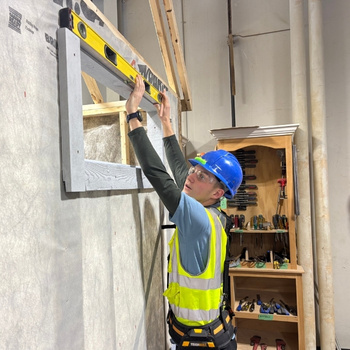
What are some projects you’ve worked on?
At the beginning of the program, each student builds their own sawhorse using blueprints provided by the instructor, and we get to take them home at the end of the year. We’ve also used scaled-down house mockups to practice building to code.
A major project we’ve worked on is building small sheds. One of them will be used by the Centre of Rural Aging and Health (CORAH) at Shelburne Campus for their gardening projects. This project has allowed us to use the skills we’ve learned in floor, wall and roof framing, along with more detailed carpentry work like siding, trim and metal roofing.
What tools or equipment do you use?
Carpenters use hand tools, including hammers, tape measures and speed squares. We also use power tools like chop saws, table saws, circular saws and impact drivers. Safety equipment includes CSA-approved steel-toed boots, safety glasses and a hard hat.
What does a typical day in your program look like?
- Morning: Classroom learning focused on textbooks, woodworking techniques and safety practices.
- Afternoon: Hands-on shop work. After a quick meeting to go over the plan for the day, we split into groups and get started in the shop.
- Evening: Homework or preparation for the next day. The workload isn’t heavy, there’s usually about an hour of homework each week.
What is the best part of your program?
The best part of the program is building strong connections with my classmates and instructors. Those relationships help keep me motivated and are connections that will last long after the program ends.
What advice would you give someone considering the Carpentry Certificate?
You can learn carpentry through apprenticeship alone, but studying at NSCC provides a great introduction to the trade. This program teaches the basics in a supportive environment and helps build the confidence you need to succeed on a job site.
What are your career goals after finishing the program?
I’m registered as an apprentice with a local carpentry company. After finishing the program, I plan to continue working toward my Red Seal certification, with the goal of owning my own company someday.
About the carpentry industry
Andrew MacAdam, Faculty for the Carpentry Certificate program, shares some insights on the program, the industry and what students can expect to learn: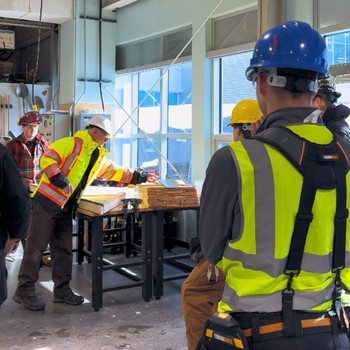
What kinds of things do carpenters build or work on?
Carpenters work in residential, commercial and industrial construction, including wood and metal framing and concrete construction. Projects can range from short-term home builds to large, multi-year infrastructure projects. Most other building trades rely on carpenters to prepare projects for their work.
What are carpentry job prospects like in Nova Scotia?
Carpentry is one of the most in-demand trades in Nova Scotia. Because skilled tradespeople are in short supply, many construction projects face significant wait times, creating strong job opportunities for qualified carpenters.
How does this program prepare students for a career in the industry?
The program is designed to prepare students for their first day on a construction site. Students learn essential safety practices, proper tool use and the foundational skills expected of a first-year carpentry apprentice.
How does the Carpentry Certificate connect to apprenticeship pathways?
Students are introduced to the apprenticeship process through their instructors, who are Red Seal certified, as well as through presentations from the Nova Scotia Apprenticeship Agency (NSAA). They learn how to become registered apprentices and what the pathway looks like after graduation. Carpentry Certificate is one of NSCC’s pre-apprenticeship programs for those looking to build skills and gain confidence prior to entering the industry.
Does the program help students find apprenticeships and jobs?
Learning how to seek employment is part of the program. While students are responsible for finding an employer, instructors regularly provide coaching, advice and guidance throughout the process.
What’s something future students should know about this program?
Like any program, students get out of it what they put into it. Becoming a skilled carpenter requires a long-term commitment, typically 4 to 6 years of apprenticeship and training. Earning a Red Seal certification opens doors to more opportunities like business ownership or senior management in construction, which can be very rewarding. Graduates could even find themselves back at NSCC teaching future trades students.
Related Stories
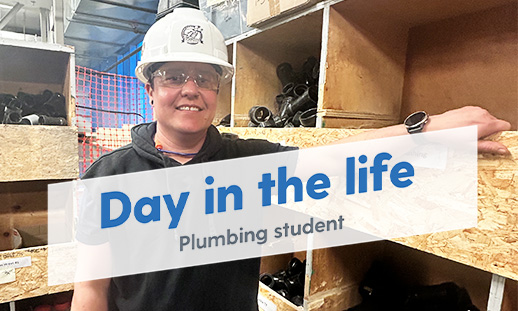 A day in the life of a Plumbing student
When Reese stepped into the Plumbing workshop at NSCC, he knew he'd found the career path he was destined for. Follow Reese as he installs a toilet fixture, explains the benefits of a pre-apprenticeship program and takes us on a tour of the plumbing workshop at IT Campus.
 A day in the life of an NSCC Graphic and Print Production student
Shelby and the Graphic and Print Production class spend two weeks bringing a community partner’s new brand to life — from production to print.