

A day in the life of a Plumbing student
Get to know a Plumbing student
Name: Reese
Program: Plumbing
Campus: IT Campus
Class: 2026
Why did you choose NSCC’s Plumbing program?
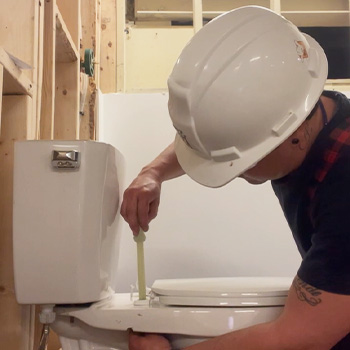
I was a student in NSCC’s Adult Learning Program (ALP) when I attended Open House to see what other programs the College had to offer. When I walked into the plumbing workshop, I immediately felt like I was home. It wasn’t a difficult decision after that. The trade checked all my boxes - I enjoy troubleshooting, problem solving and hands-on work. Seeing the demand for skilled tradespeople in Nova Scotia was another big factor in choosing the Plumbing program.
What made you choose blended vs full-time?
For me personally, I had too many responsibilities during the day to attend school full-time. The blended program allowed me to manage my responsibilities at home while studying in the evenings. It’s a great option for people who work during the day or have other commitments but still want to pursue a trade.
What's your favourite part about studying at NSCC?
My favourite part is the instructors. I wouldn’t be where I am today without their constant support and knowledge. There is also a strong sense of camaraderie in the blended program. Everyone is there because they really want to be there, and that creates a great learning environment that I will always remember.
What does a typical day look like in the Plumbing program?
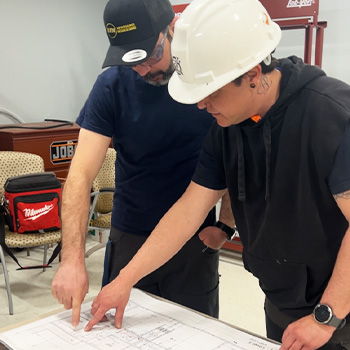
A typical day for a blended plumbing student usually involves work or personal responsibilities during the day, followed by class from 6 pm to 9 pm either Monday and Wednesday or Tuesday and Wednesday. We also have 1 full Saturday class each month from 9 am to 3 pm. Classes include both theory and practical work. We spend a lot of time in the shop learning hands-on skills, but we also learn theory such as blueprint reading, water lines, and waste and venting systems, and then applying that knowledge in the shop once we understand how the systems work.
What surprised you most about the Plumbing program?
What surprised me most was how much there is to learn. It’s not as straightforward as I originally thought. There are many variables to understand about how water systems function safely and properly. I feel like I have only just skimmed the surface of what it means to be a plumber, and I’m looking forward to continuing to learn throughout my career.
What skills do you need to work in plumbing?
If you enjoy working with your hands, solving problems and thinking on the spot, Plumbing is a great trade to consider. You also need to be willing to learn, be patient and pay attention to detail because small mistakes can cause big problems in plumbing systems. Being able to work independently and as part of a team are both very important skills in this trade.
What industries hire plumbing professionals?
Plumbers are needed in many different industries. Plumbing professionals can work in residential construction, commercial construction, industrial settings, maintenance, service and repair, and renovation work. Some plumbers work for large construction companies, some work for small local businesses and some eventually start their own companies. This trade offers a lot of flexibility and different career paths depending on what type of work you enjoy most.
What is the pre-apprenticeship program and what is the benefit for those looking to enter the Plumbing trade?
The pre-apprenticeship program is designed to give students basic knowledge and hands-on experience in the trade before they start working as an apprentice. The benefit of this program is that students enter the workforce with foundational knowledge, shop experience and safety training, which makes them great candidates for employment. It also helps students confirm that plumbing is the right career path for them before fully committing to an apprenticeship.
What’s your plan after you graduate?
After I graduate, my plan is to begin working in the plumbing industry as an apprentice so I can continue learning on the job while completing my apprenticeship hours through Nova Scotia Apprenticeship Agency (NSAA). My goal is to become a Red Seal certified plumber. I am passionate about this trade and want to continue building my skills, gaining experience and contributing to the skilled trades workforce in Nova Scotia.
Related Stories
 A day in the life: Austin
Follow along with Austin for an inside look into 3 distinct trades that make up NSCC's Pipe Trades program.
 Video: A day in the life: Molly
Molly shares a day in her life as a Natural Resources Environmental Technology student at NSCC Strait Area Campus.