

Training mechanized operators for Nova Scotia’s forest workforce
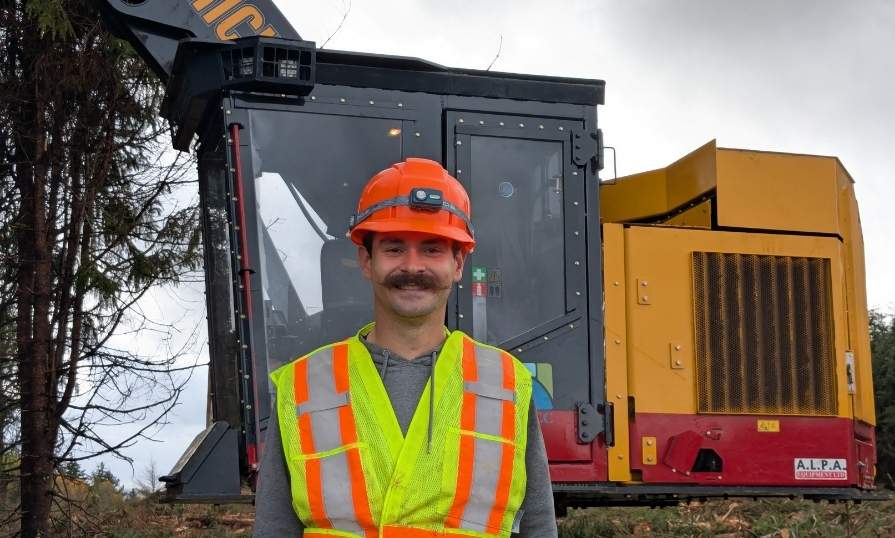
Nova Scotia’s forests are evolving and so are the skills needed to manage them. When WestFor Management and a local mill raised concerns about finding qualified equipment operators, one thing became clear: the province needed a local, accessible training pathway for mechanized harvesting.
The Mechanized Forest Equipment Operator (MFEO) program was created to meet that need. Through a unique partnership between NSCC and New Brunswick Community College (NBCC), learners gain hands-on experience with modern forestry equipment, preparing them for stable, in-demand careers in the sector.
What makes this program unique?
The MFEO program isn’t just another forestry course, it’s a specialized training experience designed for today’s industry. Students learn to operate advanced machinery like harvesters and forwarders, navigate real forest terrain and apply sustainable forestry practices.
The training combines theory, simulation and fieldwork, ensuring learners are ready for the realities of the job. Before acceptance, applicants complete an interview and simulator test to confirm the program is the right fit.
Matt Adams, NSCC Workforce Development Manager, explains the reasoning behind the program’s design:
“We created the training so learners get a strong balance of theory, simulation and hands-on practice. We want the experience to work well for different learning styles.”
Why this program matters
The forest sector faces a critical workforce challenge. As experienced operators retire, companies struggle to find skilled replacements. Without trained workers, productivity and sustainability suffer.
“Mechanized operator training was a major sector priority,” Matt explains. “The demand for lumber was growing and without trained operators, companies were struggling to meet it.”
By partnering with industry leaders like WestFor, NSCC created a program that bridges this gap, giving learners the skills they need while supporting the province’s economic and environmental goals.
Student perspective: Learning in the field
Logan Gray from Middle Sackville came into the program with years of excavator experience but quickly realized forestry was a whole new challenge. “I thought it would be simple, hop in the machine and start cutting,” Logan says. “But once you’re out here, you realize how much there is to think about. The terrain changes every day and there are so many types of trees to understand.”
Coming from Bridgewater, Brandon Croft had no forestry background and found the learning curve steep but rewarding. “It was overwhelming at first,” Brandon admits. “But once you find your rhythm in the machine, it’s incredibly enjoyable. Sometimes it’s almost soothing.”
Both graduates agree that the program opens doors to meaningful work in a sector that values skill, judgment and respect for the environment.
Industry impact: WestFor’s role in shaping the program
WestFor Management played a key role in shaping the MFEO program from the start. The company had long faced a challenge: finding skilled operators who could keep pace with evolving technology and meet production demands. This gap made it difficult for contractors to operate efficiently and remain competitive.
Breck Stuart, General Manager at WestFor, explains, “As the boomer population retires, those positions have been hard to fill because there are no trained and qualified replacements. This program bridges the toughest part of the gap for new operators.”
The results have been significant. Over the 13-week course, students progressed from cautious beginners to confident operators ready for the workforce. Adding six new operators to western Nova Scotia not only strengthens production capacity but also supports better decision-making in managing forests.
The economic impact is substantial. Six operators can add roughly 120,000 metric tonnes of wood per year, contributing an estimated $36 million to Nova Scotia’s GDP.
Looking ahead: Building a sustainable workforce
Building on the success of the first program delivery, NSCC and its partners are finalizing plans for the next phase of training to meet ongoing demand and incorporate emerging technologies.
Two new cohorts are planned for March 30, 2026 and September 14, 2026 (dates are subject to change and not guaranteed). Training will be offered at NSCC Lunenburg Campus and the Centre of Geographic Sciences (COGS).
Interested in this training?
Complete an expression of interest form and email your resume to to be considered for a 2026 cohort.