

From community to career: Wagmatcook Bridge to Construction
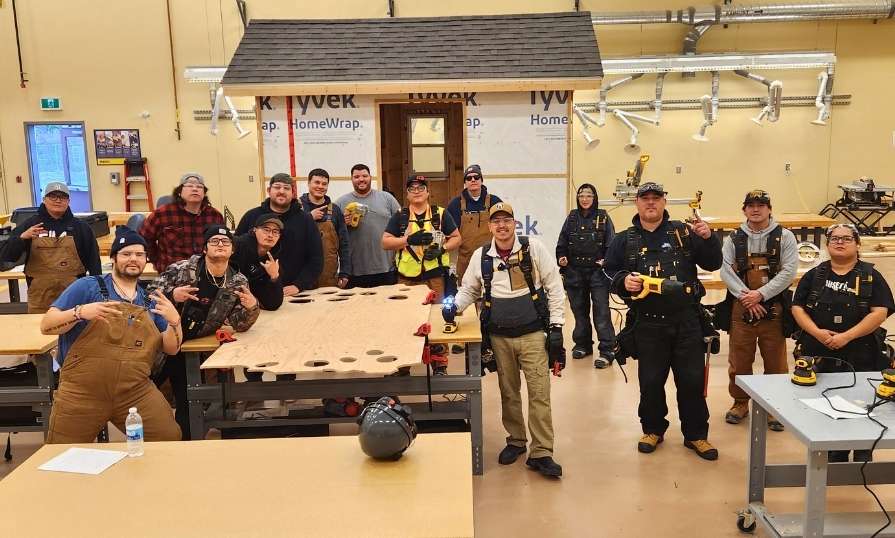
The Wagmatcook Bridge to Construction program isn’t just another training initiative, it’s a bold step toward equity, representation and opportunity in the construction trades. Designed specifically for Mi’kmaw learners, this seven-week program equips participants with the foundational skills and confidence to pursue careers in carpentry and construction while honoring their culture and community.
What makes this program unique?
The program draws inspiration from the ISANS Bridge to Construction model, but what sets it apart is its cultural foundation and community-driven approach. Unlike traditional construction training, the Wagmatcook Bridge to Construction program is deeply rooted in cultural understanding. The entire cohort is made up of Mi’kmaw learners and the instructor is a fluent Mi’kmaq speaker from the community. This representation matters, it creates an environment where learners feel seen, supported and understood, not just as students but as individuals overcoming unique challenges. Lead faculty Collin Denny explains why this connection matters:
“We have our own ways of living and interacting with one another. There’s a cultural divide between tradespeople who come from outside the reserve and those who live here. Mi’kmaq are a close-knit community, and we’re emotionally invested in our work. Having someone who understands that makes all the difference.”
Why a program for Mi’kmaw learners?
Barriers to education and training are real and persistent. From housing and transportation to cultural comfort, these challenges can prevent talented individuals from accessing opportunities. By partnering with Clean Foundation and the Native Council of Nova Scotia, NSCC’s Workforce Development team ensured wraparound supports were in place, removing obstacles and empowering learners to succeed. Matt Adams, Workforce Development Manager, shares the vision behind these efforts:
“Representation in faculty and tailored supports allow learners to show up ready to learn. It’s about equity and creating pathways into sectors where Indigenous voices have been underrepresented.”
The power of language and connection
Incorporating the Mi’kmaq language into the classroom isn’t just a nice touch, it’s been transformative. “It was night and day compared to what a non-Mi’kmaq-speaking instructor could offer,” Collin shares. “Using familiar words for tools and tasks broke down barriers and built confidence. Plus, I knew 90% of the students personally, which helped them relax and engage.”
That sense of connection was evident from day one. “I’ll never forget the look on their faces when they saw me at the front of the class,” he recalls. “They said how cool it was and that they didn’t want to let me down. That gave me a real sense of pride.”
Student perspective: a game-changer
The impact is best seen through the eyes of learners. One participant describes the experience as a “game-changer”:
“Working in a construction program has been incredible. I’ve gained hands-on experience and valuable skills that have taken my craft to the next level. From framing to finishing concrete, I’ve developed a keen eye for detail and a strong work ethic. It’s also improved my problem-solving and teamwork skills.”
Beyond technical skills, the program resonates deeply with Mi’kmaw culture. “Craftsmanship and contributing to the community are important aspects of Mi’kmaq life,” the student explains. “Now, I can use my skills for projects that matter to my community.”
Looking ahead, the program is fueling big dreams. “I’d love to start my own construction company someday. The foundation I’m building now will help me achieve that. Plus, it’s always good to have a trade under your belt.”
Building skills, creating opportunities
Graduates of the program earn a certificate and come away with hands-on experience and safety training, critical stepping stones to employment in the trades. Employers are eager to welcome this well-trained, diverse workforce and students are excited about the opportunities ahead.
The success of Wagmatcook’s Bridge to Construction program is just the beginning. NSCC and its partners are already exploring similar initiatives in other Indigenous communities, including recent training in solar photovoltaics. The goal? To continue breaking down barriers and building bridges, one program, one learner and one community at a time.