
ASL/English Interpreter alumni: NSCC convocation
September 23 is the International Day of Sign Languages as declared by the United Nations. The 2026 International Day of Sign Languages calls for action to make deaf people’s human rights a reality in all areas of life. Under the theme “Declaring Deaf People’s Human Rights”, the Day highlights the importance of recognizing, protecting and promoting these rights, including full access through national sign languages.
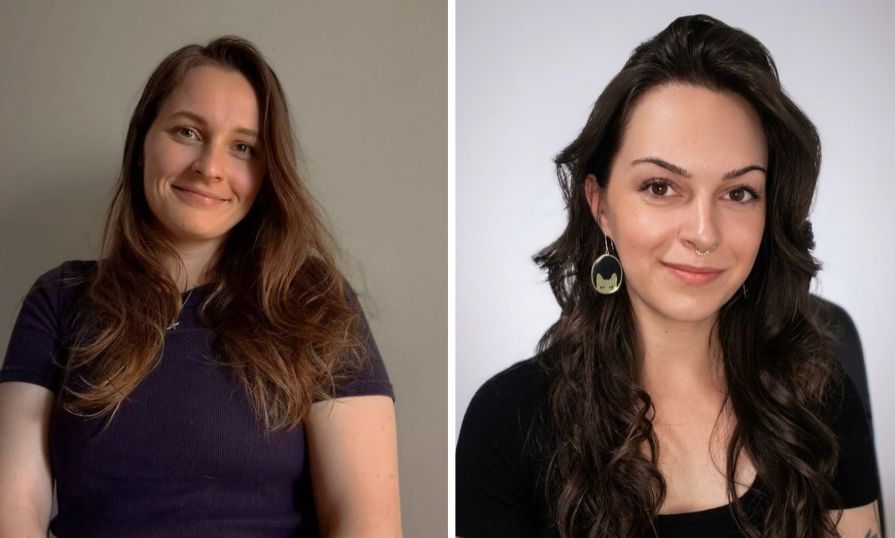
Alumni Carri Blunden and Sydney Pakosh are part of a large team who provided American Sign Language/ English Interpretation at NSCC's 2026 Convocation ceremonies. Read the stories below to learn how Carri and Sydney are using their education to create meaningful careers.
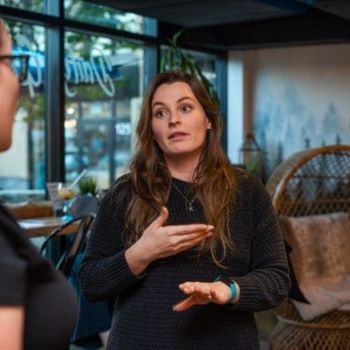
Sydney Pakosh
Deaf Studies ’19, ASL/English Interpretation ’21
“I always wanted to learn American Sign Language (ASL) but never had the resources. When I moved to Nova Scotia in 2017, I made the tough decision to pursue another career, but didn't know where to start.
I saw that the nearest NSCC campus offered a 6-week ASL summer course and thought it was my chance to learn beginner ASL. I quickly fell in love with the language, culture and community.
Inspired by the experience, I enrolled in NSCC’s Deaf Studies program (now ASL Studies) and later completed the ASL/English Interpretation program. I love to represent the education I received and the memories I made at NSCC.
It was an honour to be an ASL interpreter at NSCC’s convocation ceremonies this past June, where I proudly wore my Alumni Pin. I’ve been fortunate to interpret at NSCC convocation ceremonies for the past 5 years.
Being part of something so much bigger than myself and cheering on the graduates is an incredible experience. It's encouraging to see a group of ambitious, determined and enthusiastic graduates cross the stage and enter the interpreter profession.
I wish there was more awareness of ASL (and other signed languages) as a separate, recognized language with its own grammar, structure and linguistic rules. Many people assume ASL is just signed English, but that can't be farther from the truth.
It's a rich and beautiful language that taps into a completely different way of communicating. ASL and its users deserve more recognition and respect in our predominantly hearing world.
Deaf culture is similarly a rich tapestry of history that not enough people know about. I encourage others to learn about Maritime Deaf culture and its roots in the province, as well as Deaf culture as a whole.”
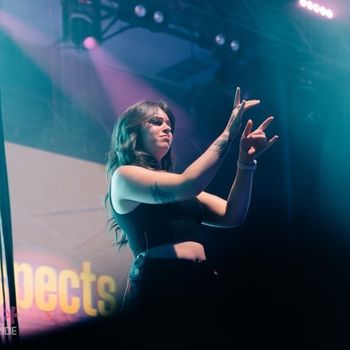
Carri Blunden
Deaf Studies ’19, ASL/English Interpretation ‘21
“Growing up with Deaf parents and family members, I’ve always been immersed in American Sign Language (ASL) and Deaf Culture. After working in law enforcement and customer service and meeting more Deaf people and Children of Deaf Adults (CODAs), I decided to return to school for NSCC’s ASL Studies and ASL/English Interpretation programs.
I fell in love with interpreting as a career. It drew me back to my familial roots and since then this job has felt like my home. NSCC helped me gain a better understanding of my own identity as a CODA and the overlap of identity and professionalism into the work.
My programs taught me the practical and theoretical skills needed to adapt to the unpredictability of our work and successfully mediate cultural and linguistic interactions between hearing and Deaf/Hard of Hearing individuals.
I love interpreting at NSCC convocation ceremonies and working with new graduates. It allows me to reflect on my own journey and progress since my own graduation. I feel such pride and joy when I see the graduates who I've supported and taken on placement finally walk across that stage and become a colleague.
I wish people understood that ASL is its own rich language with many accents and dialects woven into it. It is not 'broken' English. I also wish for people to be more open-minded about Deaf people and Deaf culture and seek to gain more knowledge about differences they may not be aware of.”