
Celebrating NSCC communities
We acknowledge and take pride in our commitment to Reconciliation, reparations and the unique role NSCC serves to uplift communities across Nova Scotia.
Decolonizing Convocation
The residential school system in Canada, which operated for over a century, forcibly removed Indigenous children from their families and communities, subjecting them to harsh conditions and cultural assimilation. Loss of language, culture and ways of knowing and being have had deep multigenerational and intergenerational impacts on survivors of residential schools and their families. The trauma experienced by these children has had lasting effects, known as intergenerational trauma, which continues to impact Indigenous communities today.
The Truth and Reconciliation Commission (TRC) of Canada has outlined several Calls to Action aimed at addressing the historical and ongoing impacts of residential schools and promoting Reconciliation between Indigenous and non-Indigenous peoples. Among these, specific Calls to Action emphasize the importance of education, cultural respect and the preservation of Indigenous heritage.
Many NSCC Convocation ceremonies provide an opportunity for graduates to smudge before the processional. Please contact the L'nu Advisor for your campus (intranet log-in required) for more information.
Songs with cultural significance
Each of our Convocation ceremonies begins with the following songs. View lyrics for the Mi'kmaq Honour Song, Lift Every Voice and Sing and O Canada
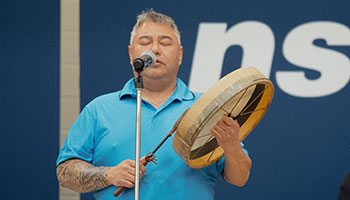
Mi’kmaq Honour Song
The Mi’kmaq Honour Song performed at NSCC Convocation is an act of Reconciliation, community, cultural revitalization and inclusivity. The song shared by singers is an invitation for the audience to participate in a powerful ceremony, which is a unifying symbol of the connection to land and enduring spirit of Mi’kmaq people.
Composed by Elder George Paul of Metepenagiag, the Mi’kmaq Honour Song calls on L'nu people to honour who they are. Performed through song, chanting and hand drumming during ceremonies and gatherings, it calls on ancestors for spiritual guidance and holds a strong message to help and respect one another. It encourages community and connection in Mi’kmaq culture and traditions - so they are preserved, shared and celebrated for generations to come.

Lift Every Voice and Sing
Often referred to as the Black National Anthem, Lift Every Voice and Sing is a powerful hymn of hope, resilience and liberation. By incorporating Lift Every Voice and Sing into our ceremonies, we affirm our commitment to the Scarborough Charter's guiding principle of Black Flourishing and the Black Community Council's (BCC) mandate of ensuring an inclusive, anti-racist and equitable learning environment - acknowledging the past and the harms done to African Nova Scotians are honoured and never forgotten.
Originally written as a poem by James Weldon Johnson in 1900 and later set to music by his brother John Rosamond Johnson, the anthem has become a cornerstone of Black cultural identity and collective memory across North America.
At NSCC, including Lift Every Voice and Sing during Convocation holds deep cultural and historical significance. It reflects our presence on Mi’kma’ki, the ancestral and unceded territory of the Mi'kmaq people. It honours the legacy of the historic African Nova Scotian communities whose contributions continue to shape the fabric of this province. Sung across generations, the anthem speaks to the enduring strength, dignity and perseverance of African descendants in the face of enslavement, racism and systemic injustice.
Mi'kmaq and Indigenous regalia
Mi'kmaq regalia is more than just attire, it is a powerful expression of identity, heritage and resilience. Each piece of regalia is unique, often handcrafted with great care and containing deep meaning. It represents the wearer's connection to their ancestors, their community and their cultural traditions.
We fully support Indigenous graduates in wearing traditional regalia during Convocation ceremonies as a meaningful act of Reconciliation and cultural recognition and identity. As Convocation is a significant milestone in the academic journey, symbolizing the culmination of years of hard work and dedication, the opportunity for Indigenous graduates to wear their traditional regalia during this momentous occasion holds profound cultural, spiritual and personal significance.
Incorporating Indigenous regalia into Convocation ceremonies aligns with the Truth and Reconciliation Commission (TRC) of Canada’s Calls to Action by recognizing and honouring the cultural significance of regalia, fostering cultural revitalization, intercultural understanding and demonstrating the College’s commitment to Reconciliation.
Gifts for Mi’kmaw and Indigenous, African Nova Scotian and Black, and 2SLGBTQ+ graduates
As part of our commitment to addressing historic and ongoing injustices to Mi'kmaq and African Nova Scotian communities and the resulting inequities that create systemic barriers, we celebrate the achievements of our graduates by gifting official Convocation attire to graduates who wish to acknowledge and display their affiliation with specific communities. Gifts are available in the gown room at each ceremony location.
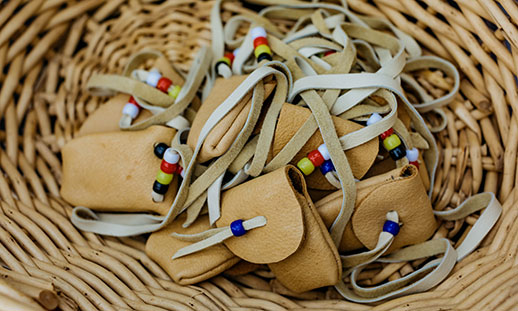
Medicine pouches presented to Mi’kmaw and Indigenous graduates
As an item of cultural revitalization and reclamation, the handmade moose and deer hide medicine pouches contain sacred medicines and items that help protect and ground the wearer.
Students who have identified as Mi’kmaq or Indigenous are invited to wear their medicine pouch if they choose to commemorate their NSCC academic experience and achievement.
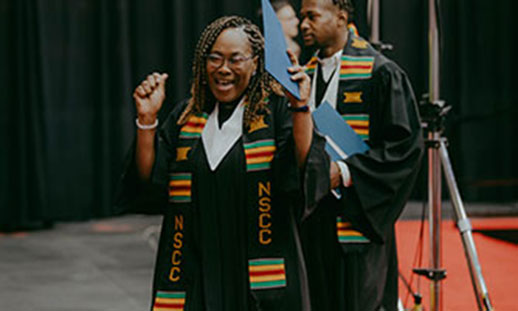
Kente cloth stoles presented to African Nova Scotian and Black graduates
Kente (KEN-tay) is considered to be the most famous of all African textiles and one of the world’s most complicated and beautiful weavings. Genuine Kente cloth is made by the Ewe and Ashanti weavers in Ghana, Africa. This cloth is very special, and each patterned design has a name and a special meaning. In the past, royalty and important figures of society wore this cloth for very special occasions. Today, Kente cloth is worn by African Nova Scotians and people of African Descent as an acknowledgement and celebration of cultural pride and identity.
The Kente cloth stole is bestowed upon NSCC graduates to commemorate the significance of graduation and pride in our African heritage and culture.
Progress Pride stoles presented to 2SLGBTQ+ graduates
This Progress Pride Stole recognizes achievement and affirms identity as a member of the 2SLGBTQ+ community. Living your truth takes courage and this stole honours strength, resilience and belonging. Inspired by the Progress Pride Flag, it reflects the diversity and intersectionality of our communities. Participation in 2SLGBTQ+ Pride recognition is entirely optional and rooted in personal choice ensuring that each graduate decides what feels safest and most authentic for them. Graduates may choose to wear this stole during Convocation or take it home privately. Pride recognition is distinct from the reparative recognition offered through Medicine Pouches and Kente Cloths which remain community-governed traditions with their own cultural histories, purposes and protocols.